
Introduction
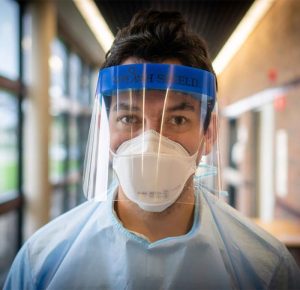
In March 2020, Americans watched the COVID-19 pandemic leap from the international news into their local nursing homes, schools, grocery stores and workplaces. A crisis that had played out in far-away countries swept into every city, suburb and small town in the U.S.
On March 11, Tom Hanks announced he had COVID-19. The same day, the NBA shut down mid-season. On March 13, former President Donald Trump declared a national emergency . On March 14, Gov. Roy Cooper shut down North Carolina K-12 schools. Three days later, Cooper barred indoor dining. The next week, North Carolinians were ordered to stay at home for a month, except for essential trips. The rhythms of normal life were replaced with a grim new vocabulary: lockdown, social distancing, Zoom school, PCR test, R-naught, positivity rate, death toll, N-95.
While the crisis constituted one of the greatest worldwide catastrophes in a generation, most people experienced COVID-19 as a local event. Because of the United States’ highly decentralized public health system, restrictions and guidance varied dramatically from state to state, even county-by-county.
Different locations endured peaks and valleys of infections, hospitalization, and deaths. Mask mandates, indoor dining, school shutdowns, stay-at-home orders, vaccination requirements and travel restrictions varied dramatically from state to state, leaving people to negotiate a patchwork of rules and regulations.
North Carolina was typical: Some counties stayed in remote learning for months longer, mask mandates were enforced differently, and rules about indoor dining varied from one municipality to another. For many people, the most important questions were the most intensely local: When will my kid’s school reopen? Do I have to wear a mask at the grocery store? What is my relative risk of infection? Is it dangerous to go back to my gym? What’s being done to keep my mom’s nursing home safe?
While national news sources like The Washington Post, The New York Times and CNN offered exhaustive coverage of the pandemic’s global impact, local news sources must provide nuanced, detailed news and analysis for people in each of the nation’s 3,143 counties or equivalents. Reporters in Washington, D.C. and New York City can’t answer those questions for someone in Southern Pines, N.C.
"Local news and COVID-19 in North Carolina" table of contents
- Local news and COVID-19 in North Carolina
- Introduction
- The Problem: COVID-19 and the shrinking local newsroom
- Research questions: What were we trying to figure out?
- Background: What does the existing research say?
- Methodology: How we did the study
- Findings: What we learned
- Discussion: What do the results mean?
- Recommendations: Where do we go from here?
- Limitations: What we couldn’t do
- Areas for further study
- Conclusion
- References, About the author, Special thanks
- Codebook