
Who works in North Carolina’s newsrooms?
In total, participating news organizations reported a total of 633 full-time equivalent staff members and 143 freelance or contract workers. This number represents all staff members at a news organization, not just journalists. In addition, participating newsrooms reported a total of 111 staff in top leadership roles.
Twenty of the 36 responding newsrooms have a staff of fewer than 10 employees. Of the 11 newsrooms with 10 or more staffers, four had between 10 and 24 staffers, five reported between 50 and 74 staff, and two indicated having a staff of more than 100 people. The median staff size was five (5). Five newsrooms did not report a count of staff.
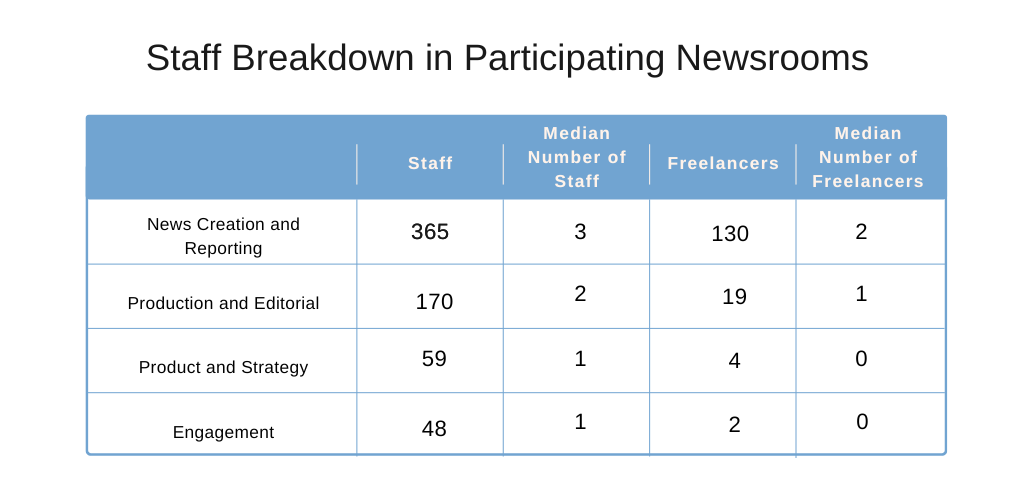
In addition to the total number of staff and freelancers, we asked newsrooms to provide the numbers of each group working in specific job categories. The table below shows the total and median number of staff in participating newsrooms working in news creation and reporting, production and editorial, product and strategy, and engagement roles.
Reported data from one newsroom showed the number of staff in individual categories far exceeded the total number of staff given. This organization has been excluded from this analysis. Additionally, because a person may work in multiple job categories, particularly in smaller organizations, the total staff across categories may not equal 633.
Analysts’ Perspectives
Analyst Jamila Elder found the median staff size of five and the number of newsrooms with fewer than 10 staff members a cause for concern, writing: “I was first blown away by the number of employees some newsrooms are operating with. It seems our business is moving a thousand miles a minute. So I can only imagine the immense stress those newsrooms must be under.”
Analyst Cierra Brown Hinton found the low number of staff dedicated to product, strategy, and engagement troubling as well. “I was shocked to see how few staff are doing product, strategy, and audience work,” she wrote, adding that these roles are critical to connecting newsrooms with communities. “With so many folks focused on the news and so few folks focused on communities, markets, audiences, products, marketing, and everything else that goes into growing audiences, there’s no wonder there is a disconnect between newsrooms and people.”
Newsroom Demographics
Despite the small number of responding newsrooms, our data represents up to a third of all newsroom staff in the state. Respondents included the three largest newsrooms in the state. Based on data from a 2017 study of state-level news infrastructure and the median number of employees per newsroom in our study, we estimate there are between approximately 1,600 and 1,800 people working in newsrooms in North Carolina.
However, one newsroom reported percentages rather than raw numbers and is omitted from these analyses. An additional nine newsrooms did not provide demographic data about their staff, with two indicating they do not track such data.
Organizational Survey
Race and Ethnicity
 Among staff reported in the organizational survey, 71% were white, followed by 23% who were Black, and three percent who were Asian American/Pacific Islander. Notably, less than one-half of one percent of staff in participating newsrooms were Native American.
Three-quarters of leadership in participating newsrooms were white, followed by 18% Black, five percent Asian American/Pacific Islander. No one in leadership at participating newsrooms is Native American or multiracial.
Newsrooms indicated that six percent each of staff and leadership are of Hispanic or Latino ethnicity.
Gender
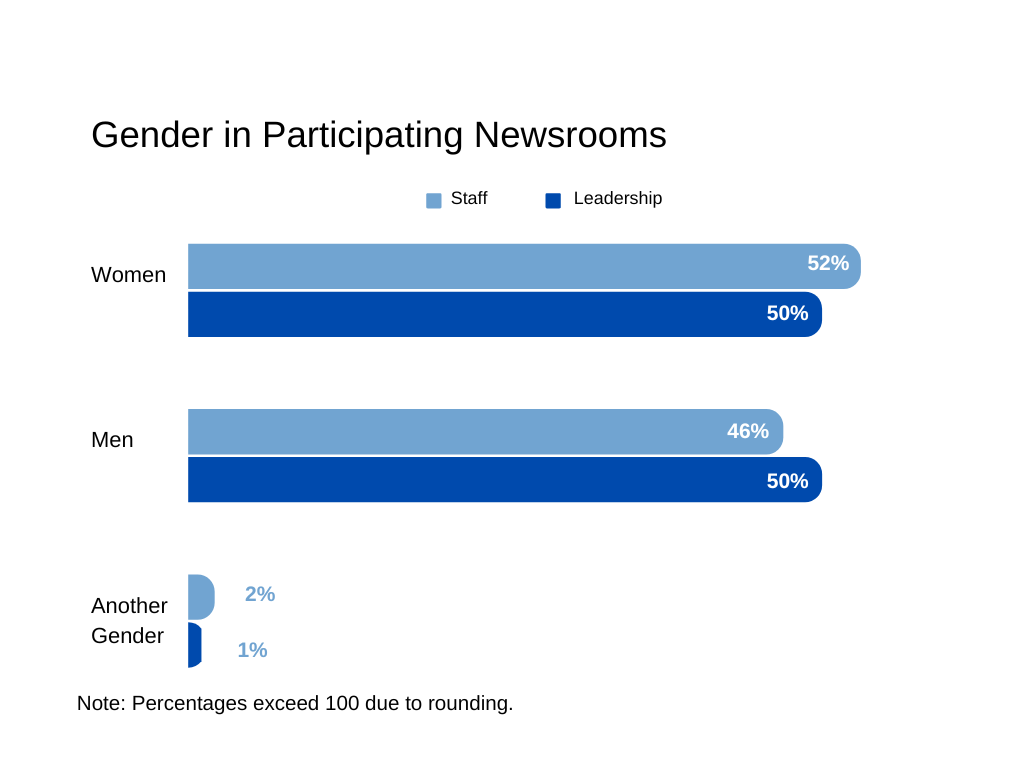 Just over half (52%) of the staff working at newsrooms responding to the organizational survey were women, followed by men (46%) and non-binary staff (1%).
Women and men make up equal proportions of leadership roles in participating newsrooms at 50% each. This is a greater percentage of women in leadership positions compared to the 2019 NLA survey of news organizations, in which women made up 40% of news management roles and the 2021 RTDNA survey, which showed that 40% of TV news directors and approximately 25% of radio news directors were women. Approximately one percent of leaders in participating newsrooms identify as another gender.
Individual Survey
Race and Ethnicity
 Respondents were asked to indicate their race based on the categories used by the U.S. Census Bureau and the Equal Opportunity Employment Commission— Black or African American, Asian American, Pacific Islander, Native American, white, or more than one race. In a separate question, respondents were asked if they identify as being of Hispanic or Latino heritage. Because of the low number of responses, we did not combine race and ethnicity categories in analysis.
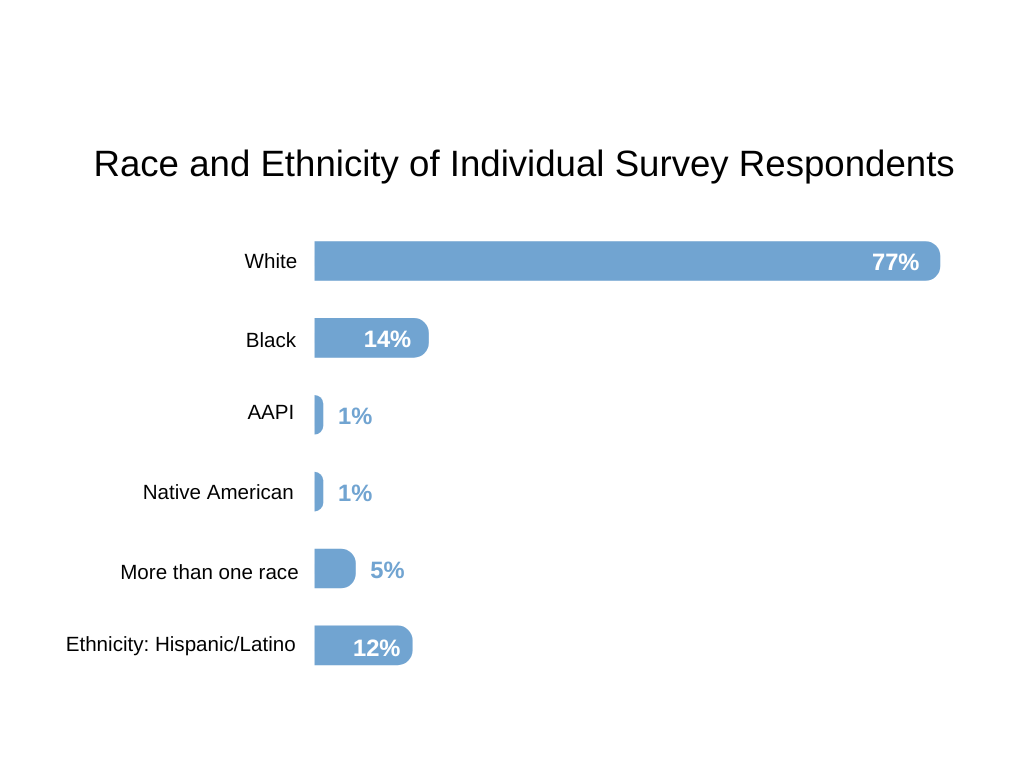
About 77% of respondents to the individual survey identified as white, followed by Black or African American respondents (14%), respondents of more than one race (5%) and respondents of some other race (4%), including Asian American/Pacific Islander (1%) and Native American (1%) respondents.
Twelve percent of respondents to the individual survey identified as being of Hispanic or Latino heritage.
Gender
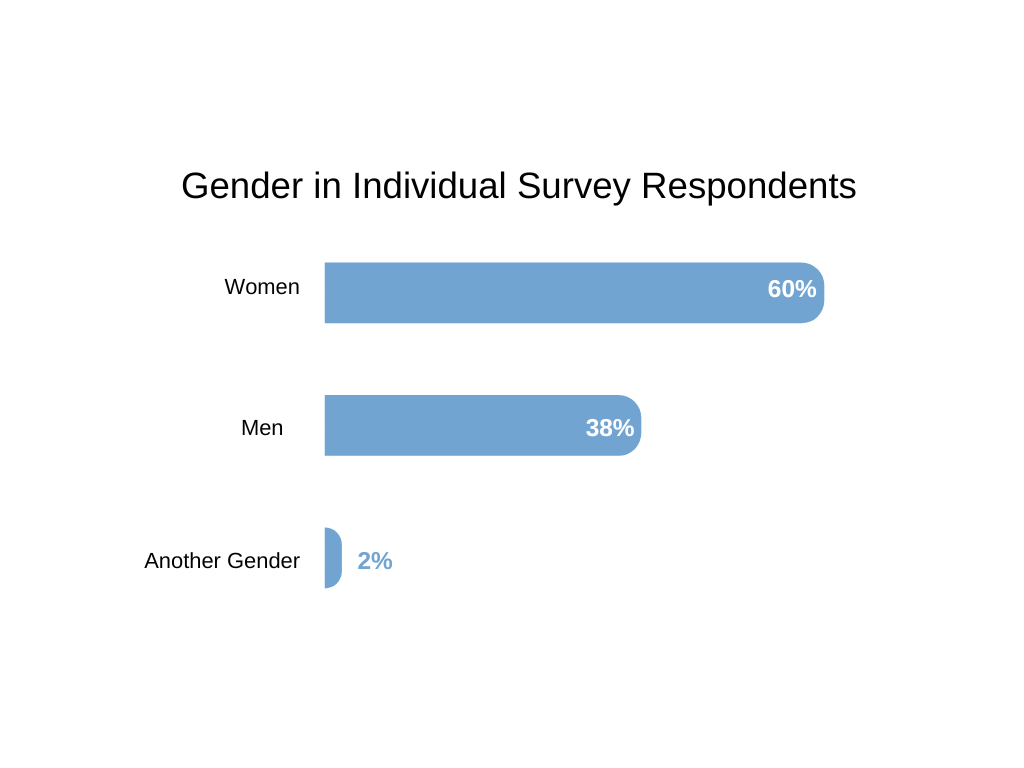 Sixty percent of respondents to the individual survey identify as women, followed by men (39%) and non-binary respondents (2%).
Sexual orientation
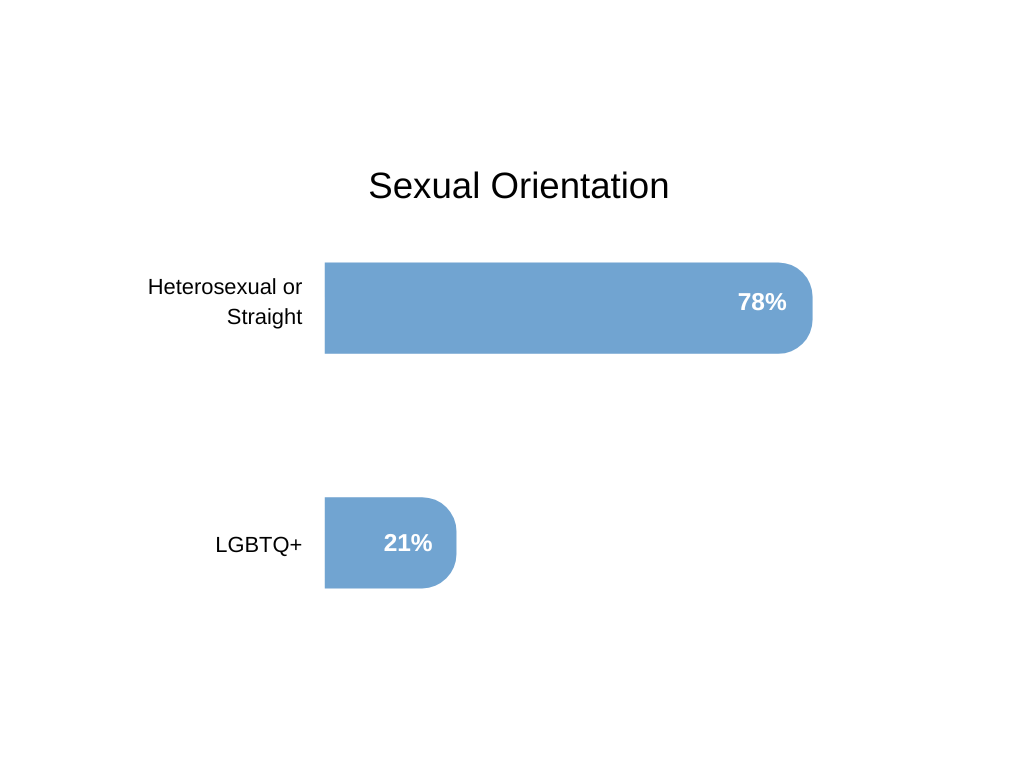
The individual survey asked respondents about their sexual orientation, data not typically kept by newsrooms. Approximately 78% of respondents to the individual survey identify as straight or heterosexual, and 21% of respondents identify as LGBTQ+.
Disability
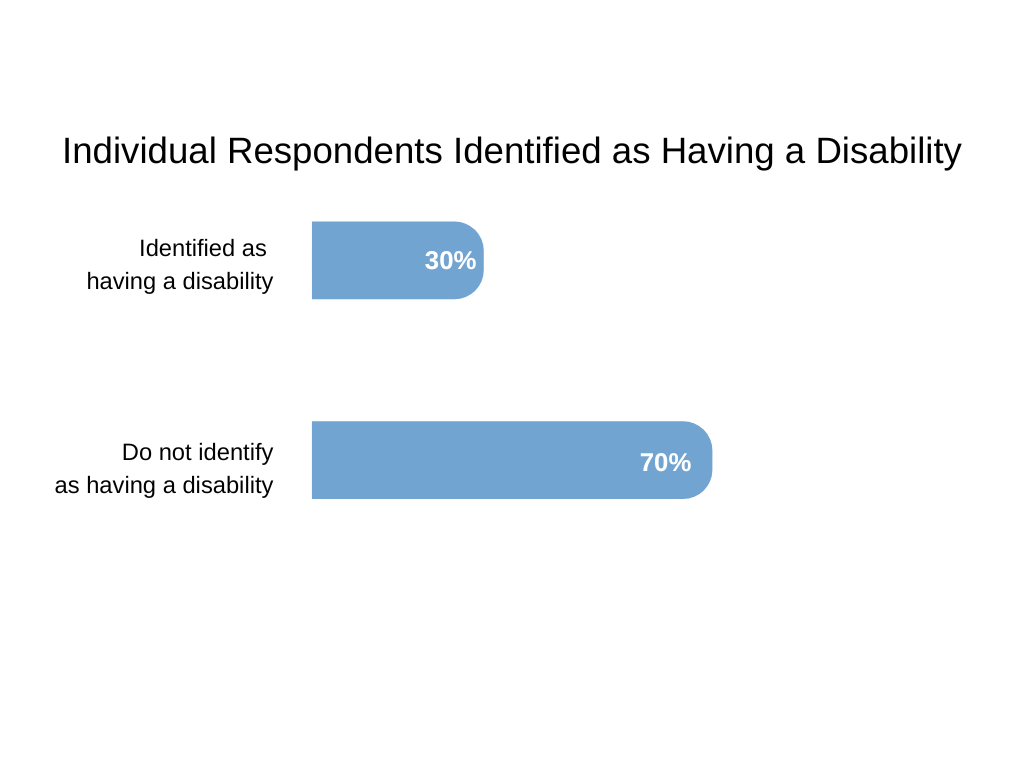 Employers are restricted from releasing data about disability, so we asked individual survey respondents whether they identify as having any of six categories of disability. We also asked respondents if they had ever requested an accommodation for a disability.
While 30% of respondents said they had some kind of disability, only a few had sought accommodations under the Americans with Disabilities Act. There is little to no data about people with disabilities in newsrooms, and as a result, resources and representation are limited.
Analysts’ Perspectives on Demographics in NC Newsrooms
Some members of the analysts panel viewed these results with concern. In reference to the individual survey results, Adriana Chavela wrote, “Overall, the results of the diversity audit were not particularly flattering: 90% of survey respondents identified as not Hispanic or Latino and close to 80% were [h]eterosexual. White voices were especially over-represented, where close to 80% identified as white.”
Eileen Rodriguez agreed with this assessment, “I’m concerned, yet not surprised, by some of the key findings of the survey. Majority of the respondents in the analysis are disproportionately white (close to 80%), heterosexual.”
Cierra Brown Hinton saw these results as reflective of a disparity between white and Black leadership in commitment to diversity, equity, inclusion, and belonging efforts (DEIB) in journalism. “However, the outsized participation in DEIB efforts by people of color and lack of participation from white folks is in alignment with what is generally true. This is definitely a trend to keep an eye on as more intentionality is put into efforts to bolster participation in the audit. For now, we know Black leaders did show up as we generally do.”
However, not all analysts saw the results as exclusively negative or discouraging. Laura Brache noted the low numbers of Hispanic and Latino staff but also wrote, “North Carolina’s newsrooms have lots of room for improvement in the Diversity, Equity and Inclusion (DEI) sector. But, overall, the results from the Individual and Organizational surveys show that, for the most part, these efforts are better than I anticipated prior to analyzing the data.”