
The 2025 Local Journalism Researchers Workshop, our annual conference co-hosted with the DeWitt Wallace Center for Media & Democracy, focused on impact and evaluation this year, the first to have a specified focus.
With more resources being directed to local news, how we measure and understand journalism’s place in communities, society and democracy is critical to knowing how best to support it. This year’s workshop was our largest yet with over 130 registered attendees — more than double our size in 2023 and four times bigger than 2019.
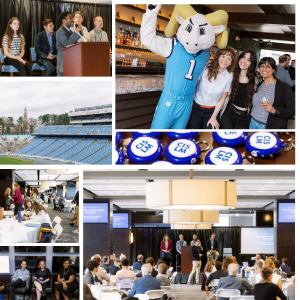
[RELATED: Read the high-level takeaways from the 2023 Workshop, written by Knight Chair in Local News and Sustainability Marisa Porto.]
And what better place to discuss impact and measurement than the Kenan football stadium — an arena where both are the foundation of the game?
The 2025 workshop highlighted the importance of inclusive, community-engaged research and the importance of connecting this research with the larger journalism field.
This great group of attendees led to rich discussions, highlighting several key takeaways:
1. Integrating Research with Community Engagement
Participants underscored the importance of conducting research that is deeply embedded within the communities it aims to serve, including journalists, engaged readerships and underserved communities. The need for relevant and actionable findings was underscored multiple times.
One plenary, Civic Information Index, dove into this as NC Local News Lab Fund Director Lizzy Hazeltine spoke about how she uses the Civic Information Index tool to help ground her work supporting the information ecosystem in North Carolina.
Led by the Information Futures Lab at Brown University, the index “combines data on elements of civic health such as volunteer rates, library visits, housing insecurity and medical debt, enabling media entrepreneurs and information providers to engage and collaborate with their audiences and communities through a renewed emphasis on the outcomes journalists and other civic health actors hope to achieve.”
2. Developing Practical Solutions for Newsrooms
The workshop also focused on creating practical tools and solutions tailored for newsrooms, especially smaller ones.
During the Newsroom Impact Measurement panel, project manager Madison Karas discussed the Tiny News Collective’s early lessons from its data and metrics program for small independent news organizations, using Datasketch dashboards to keep newsrooms informed.
3. Emphasizing the Importance of Ethnic and Community Media
A recurring theme at the workshop was the need to recognize and support ethnic and community media. These outlets play a crucial role in serving diverse populations but often operate under precarious conditions.
Dr. Antoine Haywood, an assistant professor at the University of Florida, highlighted this point during his session, emphasizing the need for research that identifies both the challenges and valuable contributions of these media entities.
4. Bridging the Gap Between Academics and Practitioners
A significant takeaway was the recognition of the existing gap between academic research and journalistic practice, and the need for new pathways between both.
Anika Anand from Commoner Co. reflected on the workshop, noting the potential for a stronger local news field if there were regular communication between academics and field practitioners. She emphasized the need for diverse types of research to build a robust local news ecosystem.
This was a theme common in the closing session, Bridging Local Journalism Research & Practice.
5. Broadening the Definition of News Contributors
The workshop also delved into expanding the definition of who contributes to trusted local news.
The Journalism + Design lab at The New School presented their work with community colleges to co-develop programs that enable broader participation in local news ecosystems. They are developing a taxonomy that recognizes various “acts of journalism,” aiming to include a wider array of contributors in the local news landscape.
The panel, Non-Traditional News Sources, was discussion-based and dove into the pros and cons of these partnerships and opportunities for community members to get involved.